
Data Center Cooling Solutions:
Formed Tube Assemblies for Direct-to-Chip Liquid Cooling
Mercury Plastics manufactures custom-formed thermoplastic tubing for direct-to-chip (D2C) liquid cooling used in AI and high-density servers. Our plug-and-play formed tubing and assemblies route coolant between cold plates and manifolds, and are compatible for use with Universal Quick Disconnect (UQD) fittings meeting Open Compute Project (OCP) standards.
Engineering Thermoplastic Solutions for Demanding Data Center Environments
AI and high-performance computing have pushed server heat loads past what air cooling can handle, moving liquid directly to the chip and into some of the most sensitive, tightly packed equipment in the building. Tubing and assemblies inside a liquid-cooled server must address a unique set of challenges, including:
Thermal Extremes and Heat Management
AI accelerators and high-density processors concentrate intense heat in a small footprint, and the cooling loop runs continuously to carry it away. Tubing must hold its shape, wall integrity, and connection security under sustained elevated coolant temperatures, around the clock.
Fluid Management and Leak Prevention
In a liquid-cooled server, coolant runs adjacent to processors, memory, and circuit boards. Every joint, clamp, and transition is a potential leak path, so reducing connections and building in dependable seals is essential to protecting hardware and uptime.
Space Constraints and Complex Routing
Server blades pack cold plates, processors, memory and cabling into tight enclosures. Tubing has to reach multiple cold plates and the server manifold without crowding components, blocking service access, or relying on loose hose runs.
Chemical and Environmental Exposure
Data center cooling loops use treated water, glycol-based coolants, and refrigerants that must stay clean over long service lives. Tube materials need to be compatible with these fluids and resist permeation, so coolant chemistry remains stable over time.
Scalability and Manufacturing Consistency
Liquid cooling has transitioned to becoming the industry standard. Server and cooling ecosystem manufacturers need a production partner that can deliver identical assemblies, with the same geometry and fit, across thousands of servers.

Custom Plug-and-Play Formed Tube Assemblies
Mercury’s formed thermoplastic tubing for data centers is customized by color, size, and form factor to fit your server architecture. Each assembly arrives ready to install, replacing loose hose, clips, and routing hardware with one engineered component.
Reduced Component Count
A formed thermoplastic tube can eliminate hose reinforcement such as braided rubber hose, strain reliefs, multiple clips and retainers, and separate routing hardware.
Competitive Advantage:
Lower assembly cost and fewer leak paths.
Better Packaging Control
A formed tube can be designed with any 3D bend and offset angle, so it follows the exact path your server layout requires.
Competitive Advantage:
Space and architecture optimization, particularly in dense AI server blades.
Consistent Routing
Unlike flexible rubber hose, a formed tube holds a fixed shape. That means a consistent bend radius, no spring-back, and no guesswork during assembly.
Competitive Advantage:
Every server receives the exact same flow path geometry.
Improved Serviceability
A formed tube assembly becomes a rigid, plug-and-play subassembly that installs and removes as one piece.
Competitive Advantage:
Installers handle a single integrated component.

Tubing Assemblies: From Manifold to Cold Plate
Mercury’s plug-and-play tubing assembly is a direct-to-chip liquid cooling connection that sits inside the server on the technology cooling loop. A rigid tube with formed bends carries coolant between manifolds and cold plates, with no strain reliefs or clips required to hold it in place. Mercury manufactures the tubing; the fittings and quick disconnects at each end come from qualified connector suppliers.
- At the cold plate: A barbed fitting such as an O-Ring Boss (ORB) connector connects the tube to the direct-to-chip cold plate.
- Through the server: The formed tube follows a fixed, repeatable path around neighboring components. Tubes and materials are specified to deliver low permeation and high-temperature performance for continuous cooling duty.
- At the manifold: A Universal Quick Disconnect (UQD) built to the Open Compute Project (OCP) specification provides a dry-break, non-spill connection to the manifold or distribution channel.
Mercury manufactures and forms the tubing, then integrates ORB fittings and OCP-spec UQDs sourced from qualified connector suppliers into a single, installation-ready plug-and-play UQD assembly. Supply and return lines can be color-coded for fast, error-free installation.
Our Approach
Integrated Plastics Production for Data Center Cooling
Liquid cooling assemblies rarely rely on a single manufacturing process. Performance, reliability, and fit depend on how multiple processes work together as a unified system. Mercury’s vertically integrated plastics production model allows data center cooling manufacturers to consolidate suppliers and simplify development.

Extrusion (Profile and Tubing)
Mercury produces precision extruded thermoplastic tubing engineered for consistent wall thickness, dimensional stability, and the material performance required in liquid cooling loops.

Electron Beam Crosslinking
In-house electron beam processing crosslinks high density polyethylene (HDPE) and Nylon tubing to improve heat resistance, mechanical strength, chemical resistance, and long-term durability, supporting continuous duty inside high-density servers.

Forming and Fabrication
Forming shapes tubing into precise 3D geometries that route around cold plates and server components while eliminating clips, strain reliefs, and extra joints. Fabrication processes such as cutting, fitting integration, and secondary operations deliver installation-ready assemblies.
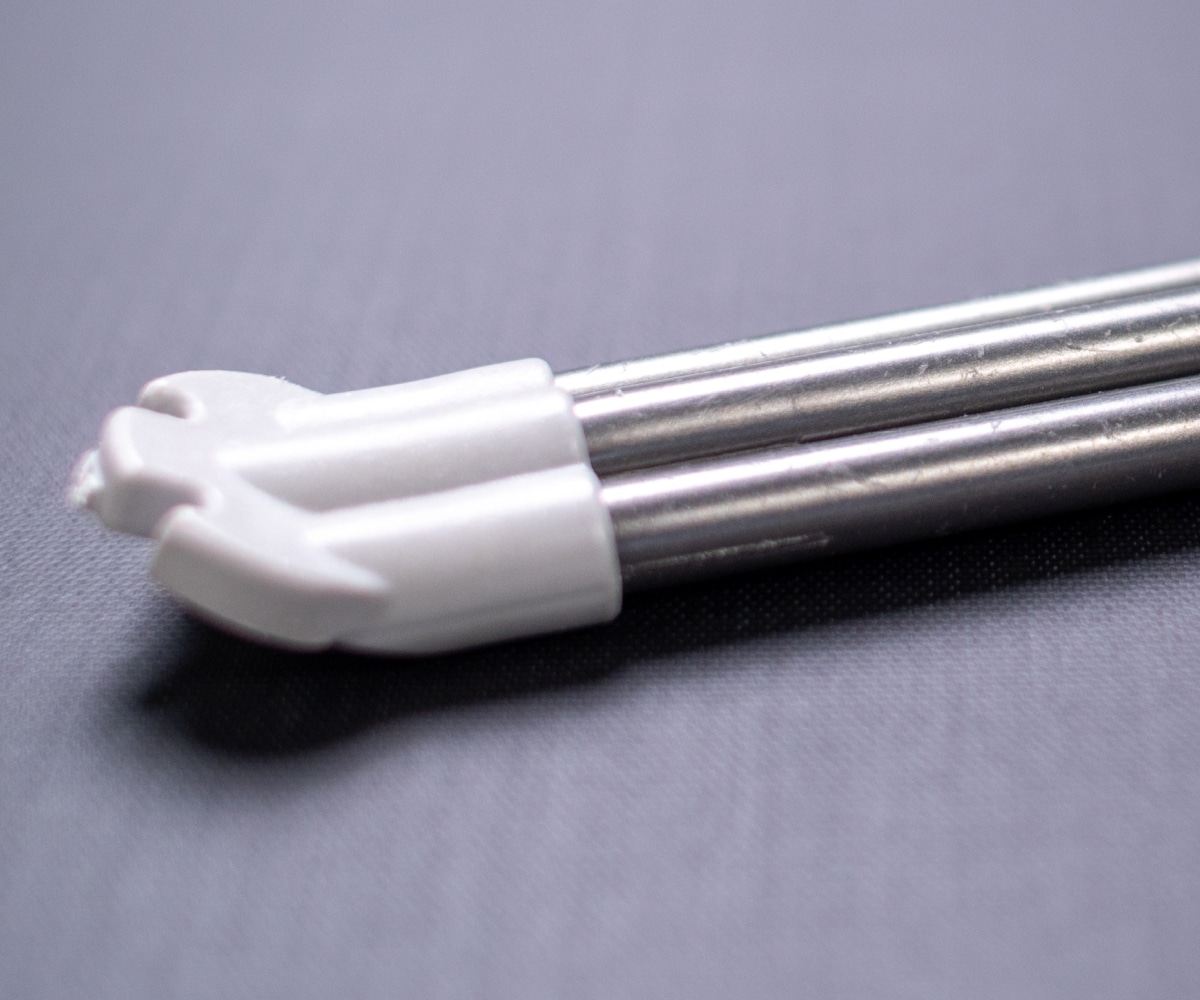
Injection Overmolding
Overmolding integrates connection points, seals, and features directly onto tubing, reducing assembly steps while minimizing potential leak paths.
Fewer components, fewer leak paths, consistent routing from server to server, and a production partner capable of supporting programs from early development through high-volume manufacturing.
Engineering Partnership From Concept Through Production
No two projects are the same, and that’s exactly where our team excels. Our engineers work as an extension of your team to:
- Evaluate performance challenges and identify root causes
- Recommend materials and processes based on mechanical, thermal, and chemical requirements
- Prototype rapidly to validate concepts
- Integrate multiple manufacturing steps (extrusion + forming + overmolding + cross-linking) into a single, optimized solution
- Scale cost-effectively from early samples to high-volume production
This cross-disciplinary engineering approach is what enables Mercury Plastics to design custom solutions that achieve better performance at a lower overall system cost.
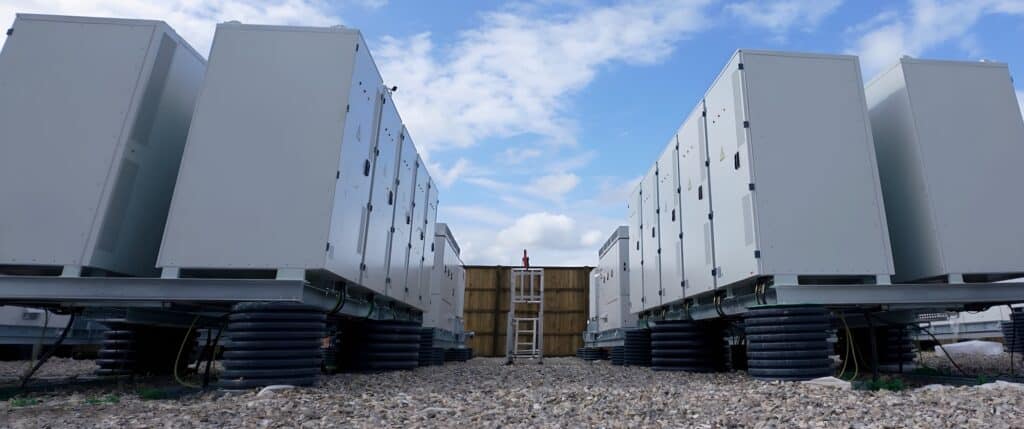
Related Industry: Battery Energy Storage Systems
Many of the manufacturing principles applied in data center cooling programs are shared with Mercury’s work in Battery Energy Storage Systems (BESS), where liquid thermal management, leak prevention, and formed routing through tight enclosures are equally critical.
Get Started with Mercury Plastics
Discover how Mercury Plastics can help you improve product performance, reduce costs, and accelerate time-to-market.